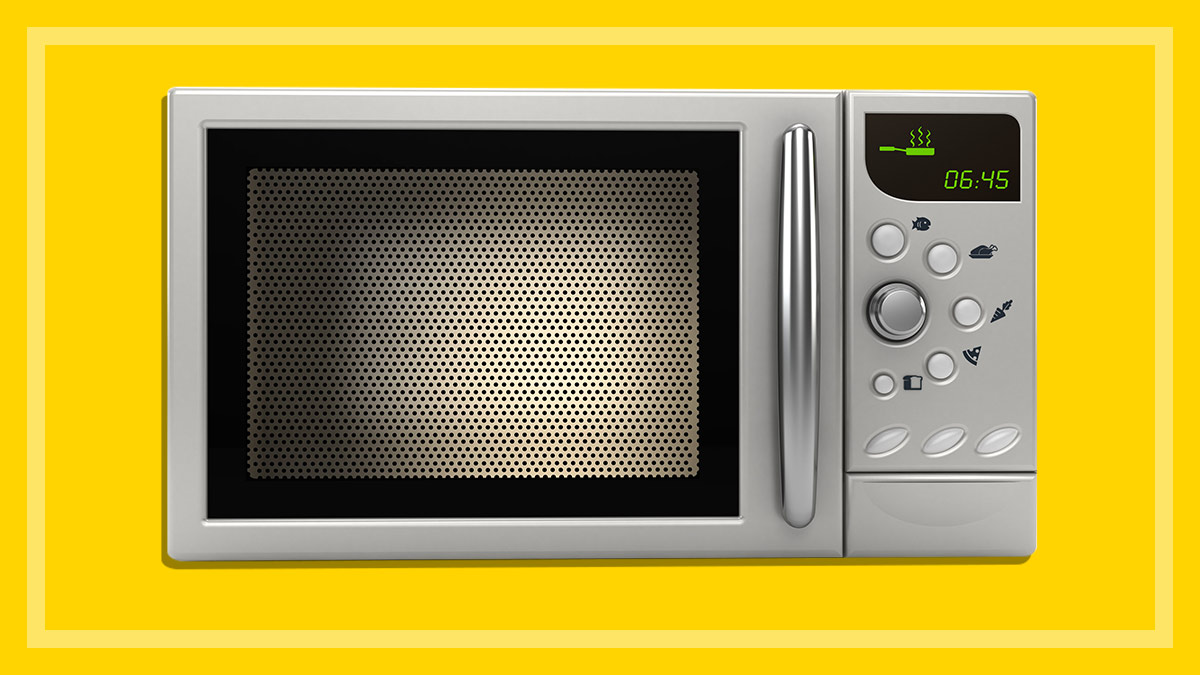
Get our independent lab tests, expert reviews and honest advice.
How to buy a great microwave
This handy kitchen appliance can save you time and money. Here's how to pick a good one.
Last updated: 12 Dec 2025
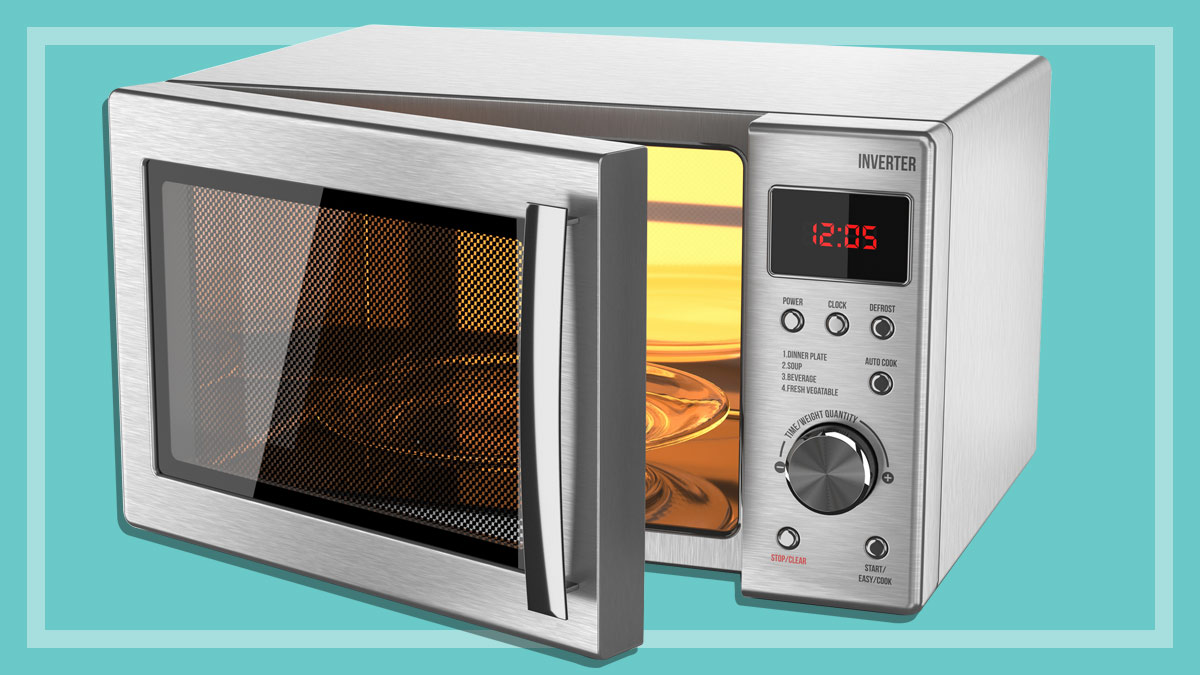
Microwaves are handy items to have in any kitchen, for anything from reheating leftovers to defrosting a chicken.
Whether you’re upgrading an ageing microwave or buying one for the first time, this guide will help you find a model with the features you need.
On this page:
- Sizing up a new microwave
- How do inverter microwaves work?
- Key features to look for
- How much do microwaves cost?
- Australia’s best microwave brands
- Australia’s most reliable microwave brands
How does a microwave work?
A microwave is a handy kitchen appliance that cooks, reheats and defrosts food relatively quickly. As the name suggests, microwaves use a magnetron that produces microwaves.
The microwaves are reflected inside the metal interior of the oven, which is then absorbed by the food and causes the water and fat molecules in the food to oscillate. This process generates the heat needed to cook, reheat or defrost your food.
Will a microwave save you money?
A microwave can speed up your cooking time, but it can also help you be more sustainable and save you on your energy bill. Microwaves are more energy-efficient than stovetops and ovens in most types of cooking, and their running costs can be as low as $10 a year.
You can also save more money by switching off your microwave at the power point when you’re not using it. Yearly standby costs for microwaves aren’t high – generally only a few dollars (or less) – but it’s a simple way to reduce your household energy consumption.
While microwaves are a great way to defrost frozen food, you can save even more energy by defrosting food in the fridge. It’ll take a bit longer and require some forward planning, but if you’re not in a rush it’s an easy change to make.
Sizing up a new microwave
Many kitchens now have a dedicated space for a microwave, so you’ll need to measure that gap and look for something that fits while still allowing space for air circulation.
If you don’t have a spot carved out, the microwave is going to take up your precious bench space, so think about how much you’re willing to sacrifice.
Most microwaves are around 50cm wide, 30cm high and 40cm deep. They’ll need about 10cm space around the sides for ventilation, and 20cm at the top where the vents are usually located.
Interior dimensions are important, too. Will your microwave-safe dishes actually fit inside? Don’t be shy about taking them into the store to check.
Looking for a small microwave
If you’re looking for a small, compact microwave there are models available with capacities of 20L and under. If you’re going this small though, keep in mind that there are limitations in terms of the size of dishes that the turntable can accomodate.
If your dish has side handles you might find it causes the turntable to fall off the runner as the handles can hit the walls and the dish might not be able to turn. Dishes that just fit in these microwaves might be difficult to remove while also protecting your hands from the heat of the dish.
If you’re looking at a compact microwave but don’t want these possible issues with the turntable, consider a flatbed microwave. The more compact models do have lower wattages (generally around 700–800W), so reheating and cooking times will be slightly longer.
Built-in microwaves and trim kits
Built-in microwaves
Having all your appliances integrated seems to be a trend for complete kitchen renovations and new builds at the moment, so you might be considering a built-in microwave.
Pros
- Can free up valuable bench space
- Can be installed at a height and location that suits you
- Gives a more streamlined look and can be teamed with other built-in appliances
- Usually comes with a grill
Cons
- More expensive than benchtop models
- May need hardwiring by a qualified electrician
- Fixed position. If it needs replacing, finding another model to fit may be difficult
- Cleaning and accessing may be difficult depending on the position
If you decide on a built-in microwave (which range in price from $500 to over $3000) it’s important to follow the cut-out dimensions recommended, as adequate ventilation is required. Some microwaves with a grill or convection function require hard-wiring by an electrician and may need to run on a 20 amp circuit.
Remember, if you ever need to replace your microwave you’ll need to consider the replacement size, as it needs to be the same dimensions with similar ventilation requirements and electrical capacity to avoid a major cabinetry replacement.
Trim kits
Microwave trim kits ($150–500) fit over the faceplate of the microwave and sit on a pedestal inside a cabinet to give you the look of a built-in. Rear ventilation is required and must reach the full height of the cabinet with no obstructions.
Trim kits are model-specific so not all microwaves can accommodate one. Standard width is around 60cm, but the height may differ to fit different size cabinets. This is to match the width of a wall oven to give a uniform look. If you need to replace your microwave, you probably won’t be able to use the same trim kit.
How do inverter microwaves work?
An inverter microwave works by heating, reheating or defrosting food at a constant power level for the duration of the cooking time. A regular microwave on medium power will heat on full power for half the time, then turn off for half the time, whereas an inverter will continually heat using 50% of its power and won’t need to turn off.
Key features to look for
Controls
Look for easy-to-use controls and good instructions on the display. The best microwaves won’t require you to refer to the instruction manual. Some have a quick-access user guide inside the door, which can help.
Visibility
A bright interior light and large transparent viewing window will let you check your food as it cooks. Many models have poor visibility through the door. Where possible, ask the store to power up the microwaves you’re considering buying to make sure the visibility is good.
Cleaning
Check there aren’t too many gaps or crevices inside or outside the microwave that could trap food and grease. Control pads are easier to clean than dials and buttons. Stainless steel may look flash but it’s harder to keep clean.
Automatic defrost
Automatic defrost prompts you to enter the weight and type of food, and the microwave then calculates the defrosting time.
Sensor cooking
Sensor programs take automatic functions one step further by measuring vapours emitted by the food to control the cooking time. No weight required.
Quick boost/start
This is a single button that delivers a 30-second or one-minute burst of 100% power, which can be increased in increments – particularly handy for reheating.
Time adjust
This lets you increase or decrease the programmed time without stopping cooking.
Multi-stage programming
This setting performs a sequence of functions, such as defrost, cook and then leave to stand.
Child safety lock
This gives you a sequence of buttons to activate and deactivate the microwave.
Kitchen timer
The digital timer can be used to time other kitchen tasks or cooking times.
Noise
Keep in mind that all microwaves beep during or at the end of operation – and most keep on beeping till you open the door to remove your food. Some also have cooling fans that can continue operating when cooking has finished. A few microwaves give you the option to adjust the noise levels – we’ve started recording this feature in our most recent tests.
How much do microwaves cost?
In our latest microwaves review, models range in price from around $49 up to $1599, and up to $3199 for a built-in model. It’s a big price range, so what are you getting for those extra dollars? Usually it’s a brand name, a larger cooking capacity, and design elements.
If those are important to you, prepare to front up the extra cash. Of course, you don’t want it to fail in its first five years, so reliability is also important.

Australia’s best microwave brands
We identify the best microwave brands based on our test results for more than 90 microwaves over the past seven years and feedback from our members on satisfaction and reliability.
Our experts have tested microwaves and convection microwaves from the major brands, including Breville, LG, Panasonic, Samsung, Sharp, Westinghouse and more.
Best microwave brands for 2025: Panasonic and Sharp
Panasonic and Sharp are equal winners of our Best Brand for 2025, with strong scores in our test results in addition to being reliable brands with highly satisfied customers. Breville comes a close third, also with strong results.
While Kmart Anko received strong scores in our testing (with 50% of the models being recommended) and performed well in terms of reliability, the customer satisfaction scores were below average, which disqualified the brand from obtaining Best Brand status.
Likewise, LG models performed well in our expert lab testing, but received below-average scores in both customer satisfaction and reliability.
It’s important to note that the performance of specific product models may vary quite significantly, so don’t assume that one brand’s products are the best across the many different features, functions and price points.
To find out which specific models we recommend based on our test results, and to make sure you buy the best, click on the ‘Recommended’ box in the filters section of our microwave reviews or convection microwave reviews.
What are CHOICE Best Brand recommendations?
The Best Brand recommendation for microwaves is based on our test results for microwaves over the past seven years, as well as customer satisfaction and reliability information submitted by CHOICE members on their experience with the brand.
The recommendation is given to companies with a clear lead over their competitors during the test period, and no more than two recommendations are given during each period.
Best Brand eligibility is tough – to be considered, we must have tested a minimum of five models, and a brand must have received a minimum of 50 responses to the CHOICE member survey. Additionally, brands must score a minimum of 60% and be above the average score for average test score, reliability and satisfaction for consideration.
How we calculate the best microwave brand
The following criteria determines the Best Brand recommendation.
- Average test score – 40%
- Brand reliability – 30%
- Customer satisfaction – 20%
- Recommended ratio – 10%
Average test score
This measures the average score for all microwave models tested in the CHOICE labs for each brand. Our testers assess:
- microwave performance by conducting reheat, defrost and cooking tests
- a convection microwave’s extra capabilities by conducting extra cooking tests
- how easy the controls are to use and the quality of instructions
- the effectiveness of the light and viewing window
- how easy the microwave is to clean
- how noisy the beeping alerts and cooling fans are.
For more details, see how we test microwaves.
Brand reliability
Our CHOICE customer insights team surveyed over 1300 CHOICE members in 2025 about whether they’ve run into any problems with their microwave in the previous 12 months.
Customer satisfaction
Our survey also asks how satisfied members are with their microwave. So even if a microwave has a fault after six months, it’s still possible for it to have a high satisfaction score – perhaps the company has customer service that goes beyond expectations, or the product is simply too good, despite some performance quirks.
Recommended ratio
This represents the percentage of microwaves that CHOICE recommends for each brand. The greater the number of models that earn a recommendation, the higher the recommended ratio score.
Previous Best Brand microwave winners
2024: Panasonic
2023: No winner
2022: No winner
2021: No winner
2020: LG
2019: LG
Text-only accessible version
Best microwave brand 2025: Panasonic and Sharp
Best Brand score
LG: 87%
Kmart (Home and Co, Homemaker, Anko): 81%
Panasonic: 80%
Sharp: 80%
Breville: 76%
Samsung: 73%
Average test score
LG: 86%
Kmart (Home and Co, Homemaker, Anko): 78%
Panasonic: 79%
Sharp: 80%
Breville: 77%
Samsung: 73%
Reliability score
LG: 85%
Kmart (Home and Co, Homemaker, Anko): 93%
Panasonic: 95%
Sharp: 90%
Breville: 84%
Samsung: 89%
Customer satisfaction score
LG: 85%
Kmart (Home and Co, Homemaker, Anko): 85%
Panasonic: 90%
Sharp: 88%
Breville: 86%
Samsung: 84%
Number of models tested
LG: 7
Kmart (Home and Co, Homemaker, Anko): 6
Panasonic: 16
Sharp: 6
Breville: 7
Samsung: 5
Number of recommended models
NOTE: Panasonic and Sharp were the only two brands that met all the criteria to qualify for Best Brand.
Australia’s most reliable microwave brands
Our CHOICE Product Reliability Survey asks thousands of members about the appliances they own, what they think of them, and how well they’ve held up over time.
The information they provide gives us a really good indication of how various microwave brands perform over time – something we can’t test in our labs.
The top performers
Most reliable brand: Panasonic
Highest owner satisfaction: Panasonic
Common issues
The most commonly reported problems respondents mentioned were about:
- the microwave’s light
- rust
Other issues include problems with the LCD display, uneven heating/cooking, being noisy, not heating/cooking, stopping working together and paint wearing off.
In our most recent survey, 1312 people told us about their microwave. Panasonic was the most popular brand, with 31% of our members saying they have a Panasonic microwave, followed by LG (21%) and Sharp (14%). Standard or conventional microwaves were far more common than convection or microwave ovens.
Microwave reliability and satisfaction
Reliability score
Kmart (159): 96%
Miele (73): 96%
Samsung (225): 93%
Breville (136): 92%
Westinghouse (59): 92%
Panasonic (1034): 91%
LG (579): 89%
Sharp (494): 89%
Aldi (Stirling/Lumia) (77): 77%
Smeg (67): 77%
Customer satisfaction score
Kmart (159): 81%
Miele (73): 89%
Samsung (225): 84%
Breville (136): 83%
Westinghouse (59): 83%
Panasonic (1034): 84%
LG (579): 84%
Sharp (494): 83%
Aldi (Stirling/Lumia) (77): 76%
Smeg (67): 71%
Note: Number in brackets shows the sample size. Differences of 5% or more for reliability are significantly different.
In total, 7100 CHOICE members participated in our 2021 Product Reliability Survey. Of these, 84% (5964 respondents) said they had bought a microwave brand new.
Reliability
Our reliability figures are based on owner assessment, not test data. We use the data we collect from CHOICE members to rate the most popular brands for reliability. We ask owners if their product has broken down in the past 12 months, and we take into account the age of the products so we can compare brands in a fair way.
Owner satisfaction
We ask owners to tell us what they think of the products they own, rating them from ‘Excellent’ to ‘Terrible’. We’ve used this information to give each brand an owner satisfaction rating so you can see what people who use these brands each day think of them.
Our brand reliability scores help guide you when choosing a product, letting you know that the brand is well regarded by CHOICE members for customer satisfaction and reliability.
Are microwaves dangerous?
Microwaves are a safe method of food preparation if used correctly, and the food is just as nutritious (more so in some cases) as any other cooking method. The electromagnetic waves stop as soon as you cut off the power and open the door, and they don’t remain in the food and make it radioactive.
The allowable limit for microwave leakage is 5mW/cm2 at a distance of 5cm, and the radiation leakage spot tests we’ve conducted on microwaves are well below this level.
All microwaves sold in Australia must pass specific requirements about leakage in accordance with relevant Australian standards. Leakage is possible if you have a poorly fitting or damaged door, so you should have it inspected by a qualified technician or return it to the manufacturer for repair.
If a microwave is in good working order, it should be perfectly safe, but it’s good practice to stand 30cm away from it when it’s in use.
How to clean a microwave
Microwaves can get dirtied with splatters and odours but the good news is you don’t need to spend too much time or elbow grease to get them clean. For regular cleans, you can wipe out the microwave with warm soapy water. For built-up grease, our home economist Fiona Mair says you can clean and deodorise your microwave in minutes using a lemon and the power of steam.
Place a small, microwave-safe bowl of water with a few slices of lemon into the microwave and heat on high for two minutes. Then simply wipe the walls, door and ceiling of the microwave with a dry microfibre cloth.
How to dispose of your old microwave
If your microwave no longer works, and it can’t be repaired, it’s time for an upgrade. But don’t forget you can keep it out of landfill by recycling it. Useful materials in a normal microwave include glass, galvanised steel, copper, aluminium and ferrite, as well as trace metals.
Microwaves that use inverter technology are generally lighter and use fewer materials (this is because they use an inverter circuit board instead of a conventional power transformer) but metals such as copper from these boards can also be recycled. Visit recyclingnearyou.com.au/whitegoods for locations near you.